Tango: Ronda & Etiquette
After a few months of tango classes, I naturally started wanting to go to a Milonga. In class, I had learned techniques like walking, the Ocho, the Giro, and the Abrazo. But when I went to my first Milonga, I found there was something just as important as technique: "etiquette and consideration." A Milonga is a social dance space where many people share the same floor. Dancing well on my own isn't enough. My partner needs to feel comfortable, the couples around us need to be safe, and I need to respect the flow of the whole event. At first, this culture felt pretty complicated. But I didn't need to memorize every rule at once. Once I understood a few core principles, I could enjoy the Milonga much more naturally and comfortably.
In this post, I'll share the 12 etiquette rules I learned the hard way at my first Milongas.
1. Follow the Line of Dance on the Floor with Distance
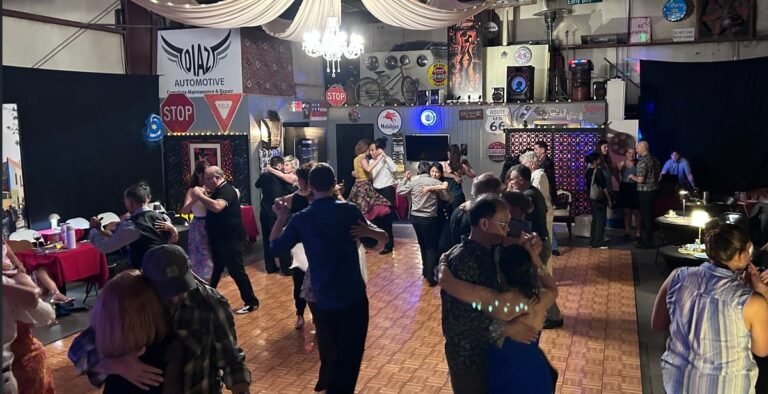
The first thing to know at a Milonga is the direction of travel on the floor. At most traditional Milongas, couples move counterclockwise around the floor. This flow is called the Ronda. When I first saw the Ronda, it reminded me of a conveyor line in a plant. Every car has to move in the same direction, at the same pace, for the line to keep running. If one car moves backward, the whole line stops. The dance floor is exactly the same. If you suddenly move against the flow or cut across the floor, you can easily bump into other couples. So before learning difficult moves, I first learned to stay with the flow of the Ronda. At a Milonga, the person who keeps the flow safe is recognized as a better social dancer than the person who shows off lots of technique.
Inside the Ronda, it's important to keep a proper distance from the couple in front of you. If you get too close, you'll collide when they suddenly stop or change direction. On the other hand, if you leave too big a gap, you block the flow behind you. It's the same idea as keeping a safe following distance on the highway during rush hour. A good leader doesn't just watch their partner; they keep an eye on the couple ahead and everything around them. When space is tight, instead of trying a new move, you can use small changes of direction or weight changes in place. Tango isn't a dance where you always have to keep moving forward. Pausing for a moment with the music is also a wonderful choice.
Just because the couple ahead is slow doesn't mean you should overtake them like you're changing lanes. Early on, I got impatient and tried to slip out to the side, and I nearly invaded the space of the couple next to me. Forcing your way past others greatly increases the risk of collision. Especially when the floor is crowded, the right thing to do is follow the flow from where you are. If there's no space ahead, just wait. Good floorcraft isn't the ability to hunt for open space. It's the ability to express the music within limited space. Walking, small Ochos, changes of direction, and brief pauses are more than enough to make a good dance.
2. Check the Couples Around You Before Entering the Floor
When a new Tanda begins, many couples enter the floor at the same time. It isn't good to just jump in anywhere. First, watch the flow of the couples already moving in the Ronda, and enter when a suitable space opens up. If possible, make eye contact with a nearby leader and confirm with each other that it's okay to enter. It's a small action, but it's an important sign of mutual respect. Once you're on the floor, try to stay in the flow of the lane you entered.
3. Check the Space Before Big Boleos and Risky Moves
In classes and performance videos, you often see flashy moves like high Boleos, Ganchos, and big Sacadas. But a social Milonga is not a stage. There are other couples right beside and behind you. High Boleos in particular are very dangerous, because they can hit someone's legs or body. After I once got kicked in the shin by the heel of someone in the couple next to me, I've never taken this lightly again. On a crowded Milonga floor, you need to make your movements smaller. Experienced dancers adjust the size of the same technique to fit the space. Expressing the music with small movements on a busy floor is actually a sign of high-level skill.
And in Argentine tango, the leader does not move their partner by force. Pushing and pulling with your arms or hands not only makes your partner uncomfortable, it can also make them lose their balance. When I was first learning, I tensed my arms as if I were moving boxes, and my teacher corrected me many times. A good lead comes from your center and the direction of your body. Followers, too, should avoid leaning too heavily on the leader's arm or shoulder. Even in a close Abrazo, each person must keep their own balance. If your partner seems uncomfortable, open the Abrazo a little or relax your tension. A good connection in tango isn't a strong connection. It's "a clear and comfortable connection."
4. Respect Your Partner's Personal Space and Abrazo
Not everyone feels comfortable in a close Abrazo. Some people love a very close connection, while others prefer a slightly open Abrazo. When dancing with a new partner, never pull them in close by force. At first, build the connection naturally and notice what distance feels comfortable to them. If your partner holds their body slightly back or keeps some space, respect that signal as it is. The Abrazo is something two people create together. It is not decided by one person.
5. Respect the Freedom to Decline a Dance
At a Milonga, anyone can decline an invitation to dance. If someone doesn't respond to your Cabeceo or turns down a direct invitation, there's no need to ask why or feel hurt. On my first night, I sent glances several times and was ignored every time. At first I felt embarrassed, but I soon understood. They might be tired, they might want to rest during that music, or they might already have plans with someone else. It's important not to take rejection personally. You should also avoid staring at someone who has declined, or asking them again and again. A good Milonga is a place where anyone can choose "Yes" or "No" without pressure.
6. Understand the Flow of the Tanda and Cortina
At traditional Milongas, music is played in Tandas, sets of several songs grouped together. It's customary to dance with the same partner for one Tanda. When the Tanda ends, a Cortina plays; you thank your partner and return to your seat. At first, I was also confused about whether I had to part ways after every song. Unless there's a particular problem, it's natural to dance with the same partner until the Tanda ends. However, if there's pain, discomfort, or a safety issue, you can stop at any time. Your personal safety comes before Tanda etiquette.
7. Don't Try to Teach Your Partner at the Milonga
This is etiquette that not only beginners but experienced dancers must remember too. A Milonga is not a lesson space. You should avoid correcting movements or giving technical advice while dancing when your partner hasn't asked for it. Comments like "You're doing the Ocho wrong," "You should place your foot like this," or "I led it, so why didn't you do it?" make your partner uncomfortable. At work, too, unsolicited advice is rarely welcome. If the dance doesn't click, don't jump to blaming your partner. Maybe my lead wasn't clear, or maybe our styles were just different. If you need practice, go to a class or a Práctica. The purpose of a Milonga is not to teach each other but to enjoy the music together.
8. Take Care of Personal Hygiene
Tango is danced very close to your partner. That's why personal hygiene is the most basic of basics. I often go to a Milonga straight from work, so I always shower and brush my teeth before heading out. Since I sweat a lot, I bring two or three extra shirts. After dancing a few Tandas, I change my shirt, which makes me feel fresh and makes my next partner more comfortable too. A small towel is also useful. I use perfume sparingly. A scent I like might be too strong or unpleasant for someone else. You should also avoid dancing after drinking too much. Your balance and judgment get worse, which puts both you and others at risk.
9. Don't Blame Your Partner When Mistakes Happen
In social tango, mistakes are natural. Feet may bump, or the timing of the lead and follow may be off. Blaming your partner at those moments only spoils the mood. Just smile lightly and return to the music. Tango is not a dance where you perfectly perform set choreography. Because two people are moving through improvisation, small misunderstandings always happen. A good dancer is not someone who never makes mistakes. It's someone who recovers naturally when mistakes happen.
10. Why Is Etiquette So Important at a Milonga?
People of all different levels gather at a Milonga. There are beginners, and there are people who have danced for decades. All of them share the same floor. If everyone moved wherever they wanted and used big moves, no one could dance safely. That's why a culture of keeping community order naturally took root at the Milonga. The Ronda, the Tanda, the Cortina, and the Cabeceo are, in the end, systems that let everyone dance comfortably together. Once I understood this culture, I realized a Milonga is not just a dance party.
11. Things Beginners Should Check Before Stepping onto the Floor
At your first Milonga, it's better to observe your surroundings for a while rather than jumping straight onto the floor. See which direction people are moving. Notice the average distance between couples. Check how crowded the floor is. And use only moves that match your level. You don't need to show off every move you learned in class. Basic walking, side steps, and simple changes of direction are enough. For my first few months, I did almost nothing but walk, and that actually helped me a lot in learning the Ronda.
And you don't need to dance all night on your first day. At my first Milonga, I danced exactly two Tandas and spent the rest of the time listening to the music and watching people. That alone was enough. Resting at a Milonga is completely natural. If you dance a few Tandas and then rest with some water, you can focus better on your next dance. As you sit and listen to the music, you'll gradually start to hear the differences between orchestras. Tango is not a competition about how much you dance.
12. Is It Okay to Go to a Milonga Alone?
Of course. Many people come to Milongas alone. Social tango is originally a culture of dancing with many different people, so going alone isn't awkward at all. I usually go alone too. If it's your first time, it's a good idea to say hello to the organizer or a teacher and mention that you're new. Depending on the community, they may introduce newcomers or explain how things work. If you start with a Milonga hosted by the studio where you take classes, you'll see familiar faces and feel much more at ease.
13. Should You Tell People You're a Beginner?
You don't have to. But if you feel nervous with a new partner, it's fine to casually mention that you haven't been learning tango for long. A good partner will adjust the difficulty for you. Experienced leaders can create a comfortable dance with a beginner follower using only basic walking and simple movements. If you're a beginner leader, just focus on basic walking rather than complicated patterns. That's how I started, too.
14. Traits of a Good Milonga Partner
When judging a good partner, you don't need to look only at flashy technique. Over the years, the partners I've found comfortable were people like this. They give their partner the right amount of space. They listen to the music. They don't move their partner by force. They are considerate of the couples around them. They don't complain when mistakes happen. They respect their partner's physical boundaries. They accept rejection gracefully. And when the Tanda ends, they express their gratitude. These attitudes are the foundation of a good social dancer.
15. Behaviors to Avoid at a Milonga
There are some behaviors you should be especially careful about. Stopping in the middle of the floor for a long conversation. Taking big steps backward without checking behind you. Using high Boleos in a crowded area. Forcing a close Abrazo on someone who doesn't want it. Judging your partner's skill while dancing. Continuing to ask after being declined. Dancing while drunk. Just avoiding these behaviors will leave a good impression at most Milongas.
Etiquette Can Vary Slightly from Milonga to Milonga, because Argentine tango is danced all over the world, the culture isn't the same at every Milonga. The atmosphere of a traditional Milonga in Buenos Aires is different from that of a local Milonga in the US. Some places place great importance on the Cabeceo, while at others it's natural to ask directly. Some Milongas play only traditional music, while others mix in modern music or Alternative Tango. When I travel to other cities for work, I often stop by a local Milonga, and the atmosphere has been a little different every time. That's why, at a Milonga you're visiting for the first time, observing for a while is the best approach. By watching how the locals behave, you can quickly get a feel for the culture there.
16. The Three Most Important Things for Beginners to Remember
If 12 rules feel like a lot, just remember these three first.
The first is "safety." Keep the Ronda and your space so you don't bump into the people around you.
The second is "respect." Respect your partner's Abrazo, their invitations and rejections, and their personal boundaries.
The third is "music." Rather than showing off complicated steps, enjoy the music together with your partner.
Looking back, most Milonga etiquette comes from these three principles.
Closing
When you first go to a Milonga, everything feels unfamiliar. The Tanda and the Cortina, the Mirada and the Cabeceo, the Ronda and floorcraft—there are many words you've never heard before. But the purpose of Milonga etiquette isn't to tie people down with complicated rules. The purpose is to "make it possible for many people to enjoy tango safely and comfortably in one shared space." There's no need to be tense trying to be perfect from the start. Just observe your surroundings, respect your partner, keep the flow of the floor, and gain experience slowly. Even after dancing tango for a long time, the most important principles don't change much. Listening to good music, connecting comfortably with your partner, and respecting other people's space. A person with these attitudes becomes a far better partner at the Milonga than someone with flashy steps.
At your first Milonga, I hope you won't make dancing a lot your goal. Just think of it as "having my first experience of becoming a good social dancer." That's how I started, and thanks to that, I'm enjoying the true charm of Argentine tango longer and more deeply.