Tango: Tanda & Cortina
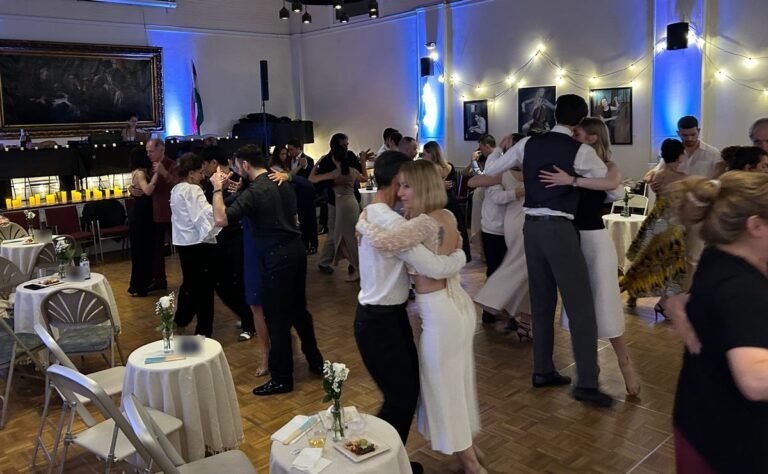
I still remember the first night I went to a Milonga. I thought the songs were just being played one after another at random. But after a few songs in a row, a completely different kind of music suddenly came on, and everyone left the floor at once. I had no idea what was happening, so I just stood there blankly. Later I found out there was a clear rule behind it: the Tanda and the Cortina. A Tanda is a musical unit made up of several tango songs with a similar character, and a Cortina is a short piece of transition music that tells you a Tanda has ended. These two turned out to be much more than just the way a DJ plays music. They are the framework that sets the flow of the entire Milonga: who you dance with, how long you dance with one person, when you leave the floor, and when you look for your next partner.
That's why I think that if you want to truly enjoy Argentine tango, you should start by understanding the Tanda and the Cortina.
1. What is a Tanda?
A Tanda is a way of grouping several similar songs and playing them as one set. At a traditional Milonga, a set is often built from songs by the same orchestra, from a similar era, with a similar mood and rhythm. For example, the DJ might play Juan D'Arienzo's rhythmic tangos back to back, or fill a Tanda with Carlos Di Sarli's smooth songs. Thanks to this, dancers can focus on dancing within one consistent musical atmosphere for the whole Tanda. A Tanda needs a unified musical texture to keep the dance stable. Beyond simply grouping songs, a Tanda turns one dance into a small story.
It varies a little from Milonga to Milonga. In the traditional format, several tangos are grouped in a row, and Vals and Milonga are often given their own separate Tandas. At the places I've been, it was usually four songs for Tango and about three for Vals and Milonga. But what matters more than the exact number of songs is that the musical character within a Tanda is fairly unified. The DJ uses the first song to draw people onto the floor, the middle songs to keep the flow going, and the last song to wrap up the Tanda. In a good Tanda, the songs never feel disconnected. They flow naturally as one stream.
2. Why dance a whole Tanda with the same partner?
At a traditional Milonga, people usually dance with the partner they started the Tanda with until that Tanda ends. After trying it myself, I think I understand why.
The first song is a time to get to know each other's Abrazo and movement. From the second song, you get a little more used to your partner's lead or follow. By the next song, the connection and the musical interpretation feel much more natural. If you split up after just one song, there's no time to adjust. Because you dance several songs in a row, you get time to tune in to each other. This is the greatest charm of the Tanda. I've had many experiences myself where a partner who felt awkward at first became much more comfortable to dance with by the last song.
Normally, it's natural to dance with the same partner until the Tanda ends. But it's not an absolute obligation. If you feel uncomfortable, if you're unwell, if there's a safety issue, or if you have a personal reason, you can stop dancing at any time. If your partner's lead or follow feels dangerous, you don't have to force yourself to continue. Tanda culture is etiquette, not a mandatory rule. Just as safety always comes first on the shop floor, safety and personal comfort come first at a Milonga too. If there's no particular problem, dance the whole Tanda together; if there is a problem, wait until a song ends, thank your partner politely, and finish there.
3. What is a Cortina?
A Cortina is a short piece of music played between one Tanda and the next. In Spanish, Cortina means "curtain." Just as the curtain comes down when the scene changes in a show, the Cortina announces that one set of music has ended. It's usually a genre other than tango: pop, jazz, rock, Latin music, and sometimes a funny little tune. Once, an old rock song came on as the Cortina, and everyone laughed as they walked back to their seats. The important thing is that when the Cortina plays, everyone can tell right away that the Tanda is over.
When the Cortina starts, stop dancing. Share a quick thank-you with your partner and go back to your seat. When the new Tanda begins, look for a new partner. Like me on my first night, beginners sometimes keep dancing or stay standing on the floor even after the Cortina has started. The atmosphere differs by region, but at a traditional Milonga, you can think of the Cortina as the signal to change partners. When the Cortina plays, watch what the people around you are doing and naturally leave the floor.
Without a Cortina, it becomes unclear when you're supposed to change partners. Some people may want to dance just one song, while others may want to keep going. With the Tanda and Cortina system, everyone leaves the floor at about the same time and can choose a new partner. Socially awkward situations drop dramatically. The Cortina also has the effect of clearing the floor once. New couples form naturally, and a new Ronda takes shape for the next music. The Cortina is a very efficient device for keeping order across the whole Milonga.
4. Why are Tandas often built from the same orchestra?
Each tango orchestra has a very different musical character. Juan D'Arienzo is famous for his strong, clear rhythm. Carlos Di Sarli is known for his smooth, elegant flow. Osvaldo Pugliese has intense tension and dramatic shifts in dynamics. If songs with different characters keep getting mixed within one Tanda, it's hard for dancers to adapt to the music. When songs with a similar character are grouped together, you and your partner can dance deeper and deeper into that mood. That's how the tradition of grouping recordings from the same orchestra or a similar era into one Tanda took root.
A Milonga doesn't play only Tango all night. Usually, Tango, Vals, and Milonga are mixed in at the right moments. The Tango Tanda is the most common, and depending on the mood of the music, a huge variety of dancing appears. The Vals Tanda has a strong smooth, flowing feel. People who enjoy turns and continuous movement especially love it. The Milonga Tanda is fast and lively, with lots of small, rhythmic steps. As Tandas of different genres alternate, the atmosphere of the Milonga keeps changing too. The usual ratio of Tandas is about Tango:Vals:Milonga = 3:2:1, 4:2:1, or 5:3:1, and it can vary a little depending on the DJ's style. As I remember it, the East Coast of the US tends toward 3:2:1, the Midwest toward 4:2:1, and the West Coast toward 5:3:1.
A good tango DJ doesn't just pick the songs they personally like. They consider each song's orchestra, era, singer, rhythm, and recording quality, and then build a Tanda from songs that go well together. They also think about the atmosphere of the whole Milonga. Early in the night, they choose music that's relatively easy to dance to, and when the room fills up, they place high-energy music. Sometimes they follow a strongly rhythmic Tanda with a smooth one to change the mood. Just as you look at the flow of the entire day when drawing up a production plan, a good DJ designs not only each Tanda but the whole night as one long musical flow.
5. Why the first and the last song of a Tanda matters
The first song of a Tanda is very important. Dancers listen to the first song and decide whether to dance this Tanda or sit it out. They often decide who to dance with after hearing the first song, too. When a familiar D'Arienzo song comes on, people who love rhythmic dancing quickly look for a partner. When a lyrical song plays, those who prefer a smoother style start moving. Many times I've heard just the first phrase, thought, "Ah, I have to dance this one," and hurried to catch someone's eye. That's why DJs often choose a first song that clearly shows the character of the Tanda.
The last song of a Tanda is important as well, because it wraps up the experience with the partner you've danced several songs with. A good last song might calmly settle the energy, or on the contrary, end with a strong impression. When dancers know it's the last song, they focus even more on this final piece of music with their partner. When the song ends and the Cortina plays, you say thank you and go back to your seat.
6. Which Tandas should beginners start with?
When you first go to a Milonga, you don't have to dance every Tanda. Just start with music that sounds comfortable to you. A Tango Tanda with a clear rhythm and a not-too-fast tempo is easy for beginners. Vals or a fast Milonga may feel a bit difficult at first. In the early days, I would quietly sit down whenever a Milonga Tanda came on. But there's no fixed order. Choose music you like and dance with just basic walking and simple changes of direction, and that's plenty. The more of a beginner you are, the more important it is to have Tandas where you rest. Watching others dance while waiting for the next music is part of the Milonga, too.
Once you fall for tango, you want to dance as many Tandas as possible. But if you dance without a break, your focus and stamina drop. This is especially true on days I head straight to the Milonga after work. When you're tired, your balance wobbles, and it affects your floorcraft as well. It's good to rest for a Tanda after dancing a few, drinking water and listening to the music. While you rest, you can also listen closely to guess which orchestra will come next. In tango, dancing in good condition matters more than dancing a lot.
If you and your partner click, you can meet again in another Tanda. That said, at a traditional social Milonga, there's a strong culture of enjoying dancing with many different people. There's no need to dance every Tanda with one person. Even if you came with your partner or spouse, you don't have to dance only with each other. A Milonga is basically a social dance space, so everyone can enjoy it in their own way. What matters is mutual agreement with your partner and respect for the atmosphere of the event. I remember one time when my leading and my partner's following matched so perfectly that we kept dancing Tango, Vals, and Milonga together, one after another. It's a truly wonderful memory.
People who have danced tango for a long time don't react the same way to every piece of music. They develop favorite orchestras, singers, and styles. Some people especially love D'Arienzo Tandas, while others always want to dance when Di Sarli comes on. With dramatic music like Pugliese, you might want to dance with a particular partner. These days, when Di Sarli plays, my heart moves before I do. Hearing the music and thinking, "Who do I want to dance this Tanda with?" is also part of the fun of the Milonga. The longer you learn tango, the more your eye for choosing music grows along with your eye for choosing partners. With the partner I mentioned above, I "reserved" (so to speak) a Pugliese Tanda and we agreed in advance on where to meet. Not long after, a Pugliese song came on, and we went straight to our agreed spot and danced that entire Pugliese Tanda together.
7. A good Tanda deepens the relationship between partners and the music
The greatest strength of the Tanda system is that it gives two people enough time to adjust to each other within the music. In the first song, you get to know each other. In the next, the connection becomes comfortable. After that, you interpret the music more freely. It's similar to building a small relationship in a short amount of time. When the last song ends, that relationship comes to a natural close along with the Cortina. In the next Tanda, you meet new music and a new partner. This repeating structure creates the unique rhythm that only a Milonga has.
If you're going to a Milonga for the first time, you don't need to memorize every rule. Remembering just the following is enough.
First, once you start a Tanda, you usually dance it to the end with the same partner unless there's a particular problem.
Second, when the Cortina plays, you can take it that the Tanda is over.
Third, during the Cortina, thank your partner and go back to your seat.
Fourth, when the next Tanda starts, you can look for a new partner.
Fifth, if you feel uncomfortable or unsafe, you can stop dancing at any time, even in the middle of a Tanda.
Sixth, don't try to teach your partner while dancing.
Knowing just this much will help you act much more naturally at your first Milonga. Even I, standing blankly in the middle of the floor that first night, would have been far less flustered if I had known this.
8. Why Tanda and Cortina make the Milonga special
If the music at a Milonga played at random and there were no set time to change partners, the atmosphere would be completely different. The Tanda gives you enough time to share a musical experience with one partner. The Cortina ends that experience naturally and creates space for the next encounter. As this process repeats all night, the Milonga takes on its own unique rhythm, unlike any other dance party. The music starts, you meet a partner, dance a few songs together, part ways with the Cortina, and wait again for new music. Within this repetition, countless small tango experiences pile up.
Conclusion
The Tanda and the Cortina are among the most important concepts for understanding the Milonga in Argentine tango. A Tanda is a musical unit of several similar songs grouped together, and it's usually the time you dance with the same partner. A Cortina is the transition music that marks the end of a Tanda and lets partners naturally return to their seats. At first, this structure felt unfamiliar to me. But after experiencing a few Milongas, I realized there's no more natural way to do it. Building a connection with one partner little by little, exchanging thanks when the last song ends, and waiting for new music and a new partner after the Cortina: this is the unique charm of Argentine tango's social culture.
If you're learning tango, at your next Milonga I encourage you not to focus only on your steps, but to listen to how the music is organized into Tandas.
Once you start to hear the differences between orchestras and Tandas, the way you enjoy the Milonga becomes much deeper. For me too, tango became even more fun once I began to hear those differences.