Tango: Global Spread
On weekdays I manage reference Spec. and Engineering Changes at an automobile plant, and on weekends I'm usually out enjoying tango at a milonga. When I first started learning tango, I simply liked the new style of movement and the music, but as time went on I grew curious about how tango became a culture that people all over the world now enjoy together. These days you can easily find tango classes and milongas not only in the US and Europe but in many cities across Asia and Oceania. But it wasn't a global dance from the start. In the late 19th and early 20th centuries, it was just a local urban culture that grew up around Buenos Aires and Montevideo. So how did this dance cross the Atlantic to Europe, and then go on to become popular even in the United States? Looking into that process, I found that travelers, musicians, dancers, upper-class culture, radio and records, and film and stage performances all played a part.
Below I've laid out, in order, how tango grew from the culture of a South American port city into a dance enjoyed the world over.
1. Tango's starting point was the Río de la Plata region
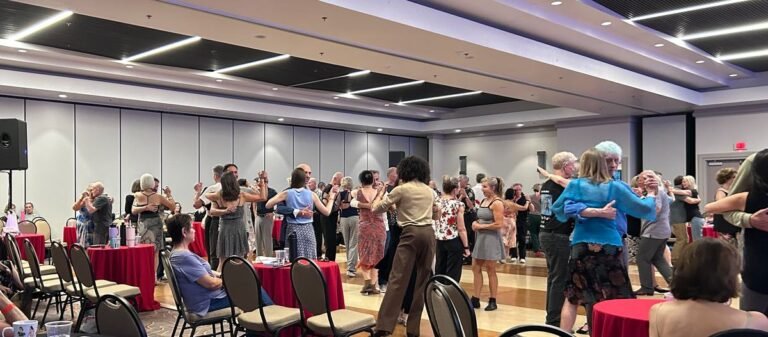
Tango was born in the Río de la Plata region, centered on Buenos Aires and Montevideo. At the time, this was a place where European immigrants, people of African descent, and the local criollo culture all mixed together. Tango was essentially created within that multicultural urban environment. At first it was just a neighborhood dance and neighborhood music, but because these were port cities, the connection to the outside world was especially active. Not just people and goods, but music and dance traveled through the port together.
Buenos Aires and Montevideo were international port cities. Ships regularly came and went between Europe and South America. European immigrants came in, and in turn Argentina's wealthy, merchants, and artists traveled to Europe. In this back-and-forth, tango naturally began to cross the ocean too. Nowadays a single internet connection can share music instantly, but in an era without anything like that, the movement of people themselves was the most important channel for a culture to spread.
2. In the early 20th century, Europe was eager for new dances
In the early 1900s, new social dances were all the rage in Europe's major cities. Cities like Paris and London had a strong tendency to embrace foreign music and dance as the latest trend. High society and the art world in particular had a keen interest in exotic cultures. Tango fit perfectly into this environment. The close connection between partners, the distinctive movements, the unfamiliar music—all of it must have looked entirely new to Europeans of the time.
If you had to name the single most important city for tango's spread in Europe, it would undoubtedly be Paris. In the early 20th century, Paris was the center of world fashion, art, and social culture. It had a structure where whatever became trendy in Paris influenced not only other European cities but the United States as well. As Argentine travelers, artists, and the wealthy introduced tango to Paris, interest began to grow. In that way, tango gradually established itself as a strong trend in Parisian society.
3. Why did success in Paris also affect Argentina?
An interesting point is that after tango succeeded abroad, opinions about it within Argentina itself changed as well. Early tango carried a strong image as working-class, common culture. Some among the upper class did not consider tango a refined culture. But once tango became fashionable in Parisian high society, the mood shifted completely. Once it gained the image of a dance recognized in the heart of European culture, Argentine high society, too, began to embrace tango. In the end, tango crossed from Buenos Aires to Paris, and then returned home carrying the reputation it had earned in Paris. Thinking about it now, that's quite an irony.
Why did tango become such a huge trend in Paris? There were several reasons.
First, the dance itself was distinctive.
Second, it carried the exotic image of a new culture from South America.
Third, interest in new social dances in Europe at the time was already running high.
Fourth, fashion and social culture combined naturally with tango.
As outfits, parties, and events for dancing tango appeared one after another, it settled in as a full-fledged cultural trend.
As tango became fashionable, related products and culture became popular right along with it. The name "tango" began appearing across fashion, colors, event names, and more. In other words, tango became more than just a single dance—it became a new cultural trend of that era in Europe. I sometimes think it's similar to how a single music genre today can spark a worldwide trend.
4. As tango reached Europe, the dance itself began to change
When a culture moves to a different region, it rarely stays exactly as it was. Tango was no exception. Europeans reinterpreted tango to fit their existing social dance culture. Some movements were simplified or modified. The posture and progression also shifted gradually. These changes laid the groundwork for what would later become European ballroom tango.
If you look at Argentine Tango and Ballroom Tango side by side today, the differences are quite significant. In Argentine Tango, improvisation and the connection with your partner matter above all else. Ballroom Tango (also called Continental Tango, one of the modern dance events in British Blackpool dancesport) has a more standardized posture, movements, and competition rules. This difference arose because, as tango spread through Europe and America, it adapted to the culture and systems of each region. So even though the two share the same roots, today they should be seen as two different dance cultures.
Having gained popularity in Paris, tango quickly spread to other major European cities. Interest in tango rose in London, Berlin, Rome, and elsewhere. It began to be introduced as a new dance in social clubs and balls. Teachers started teaching tango, and dance manuals even began to appear. In the process, each country reinterpreted tango in its own way.
Around the same time tango was trending in Europe, interest in new social dances was also rising quickly in the United States. Big cities like New York in particular were quick to adopt European fashion and performance culture. Tango, having succeeded in Europe, was naturally introduced to America as well. American dancers and performers also began using tango in their own performances.
Stage performances played a large part in how tango became known in America. At the time, musicals, vaudeville, and dance performances were all wildly popular. A new, exotic dance was exactly the kind of material that could catch an audience's eye. Tango fit well with this kind of stage. Dramatic postures and the movement between partners could leave a strong impression on an audience.
5. Film also changed tango's image
As the film industry grew, tango became even more widely known. Tango on screen was often portrayed far more dramatically than the dance actually done at a real milonga. Strong expressions, exaggerated postures, and flamboyant movement were all added in. As this image became firmly fixed in the public mind, many people came to remember tango as an intensely passionate, dramatic dance. Honestly, the feeling is quite different when you actually dance it at a milonga, and that's a bit of a shame.
The American film industry had a huge influence on shaping tango's global image. In movies, tango was often used in scenes depicting passion, seduction, and conflict. But real Argentine social tango is actually much more subtle and relaxed. Taking small steps in close embrace while interpreting the music is really what matters most. So it's fair to say that movie tango and real milonga tango are quite different. I remember being surprised myself, the first time I went to a milonga, at how different it was from the movie image.
In the early era of film, stars like Rudolph Valentino had a huge influence through their association with tango. Tango scenes in film left a strong impression on audiences. Those scenes fixed tango in people's minds as a romantic, exotic dance. But this too was an image that had drifted from the reality of Argentine tango culture.
6. Why did tango become standardized in America?
From the perspective of America's social dance industry, there was a need to teach the dance systematically. If many people were going to learn it the same way, it was far more convenient to standardize the posture and steps. Dance studios and teachers organized tango into a set framework. In this process, it developed in a direction completely different from the highly improvisational Argentine tango.
Professional dance studios grew rapidly in America. Teachers taught several social dances together, including Waltz, Foxtrot, and Tango. Within this system, tango established itself as one official genre of social dance. As competitive dance and ballroom dance later grew, tango became even more standardized along with them.
Within ballroom dance, Tango branched out in several directions as well. Different systems emerged, like International Style Tango and American Style Tango. All of these are historically connected to Argentine Tango, but the way they're danced today is quite different. They differ in posture, frame, direction of travel, and the patterns used.
While tango was being transformed like this in Europe and America, social tango culture in Buenos Aires itself kept developing in its own way. In the 1930s and 1940s, countless orchestras emerged. Musicians like D'Arienzo, Di Sarli, Troilo, and Pugliese each created their own distinct style. Milonga culture grew significantly as well. In the end, ballroom tango abroad and social tango within Argentina ended up walking separate paths.
7. The Golden Age also played an important role in the global spread
During tango's Golden Age, which lasted from the mid-1930s to the mid-1950s, an enormous amount of music was recorded. As the radio and recording industries developed, this music was able to cross borders. Even today, much of the traditional music played in milongas around the world comes from recordings of this era. Most of the songs I often hear at milongas myself are from this period. So the Golden Age wasn't just a peak within Argentina—it became the musical root of tango culture worldwide afterward.
Carlos Gardel can't be left out of how tango became known to the world. Through records, performances, and film, Gardel rose to become an international star. His songs became widely known not only across Latin America but in Europe and the United States as well. Gardel's influence was enormous in tango becoming more than just a dance—establishing itself as a music and a culture in its own right.
Records by Gardel and tango orchestras were hugely popular in Spanish-speaking countries outside Argentina as well. In cultures that shared the same or a similar language, the emotion in tango lyrics came across just as easily. Themes like love, heartbreak, and nostalgia tend to resonate across borders. In this way, tango established itself as one of the major popular music genres spanning all of Latin America.
Once tango's Golden Age passed, the popular music landscape changed dramatically as well. Rock and roll and new music genres captured the hearts of the younger generation. Large-scale social dance culture changed along with it. Tango didn't disappear entirely, but it was no longer at the center of popular culture the way it once had been.
8. Astor Piazzolla drew the world's attention once again
In the latter half of the 20th century, Astor Piazzolla introduced a new form of tango music to the world. Piazzolla actively embraced the influences of classical music and jazz. His music had a different character from traditional social-dance tango, but it drew great interest on concert stages around the world. Through this, tango showed that it didn't have to remain the dance music of a bygone era, but could develop as modern art music too.
The international boom in tango stage performances from the 1980s onward was decisive in growing the global Argentine Tango community we know today. Argentine dancers and musicians began presenting tango on stages abroad. Audiences rediscovered tango through spectacular performances. And some weren't content just to watch a performance—they wanted to learn it themselves. This became the catalyst for new social tango communities to grow.
9. The impact of the Tango Argentino stage show
International tango stage performances in the late 20th century drew great interest in Europe and America. The intense performances put on by professional dancers sparked new interest in tango. Many audience members actually began learning Argentine Tango themselves. Afterward, Argentine teachers began holding workshops and classes abroad.
After the 1980s, more people began learning Argentine tango in various major American cities. Classes and milongas sprang up centered around New York, San Francisco, Los Angeles, Chicago, and others. What started as relatively small gatherings gradually gave way to regular events and festivals over time.
10. New social tango culture also emerged in Europe
Not just in Paris but in London, Berlin, Amsterdam, Rome, and many other cities, the Argentine Tango community grew. European dancers even flew directly to Buenos Aires to learn. Argentine teachers, in turn, toured Europe holding classes. In the end, the movement of people once again became the key to tango's spread.
In the latter half of the 20th century, international air travel became far easier than before. Dancers could now travel directly to Buenos Aires. Argentine teachers and dancers, too, could travel between many countries. Thanks to this direct exchange, tango culture could be passed on abroad more accurately.
After the 1990s, as the internet spread, the situation changed dramatically once more. Information about tango events could now be shared easily. Finding music also became much easier. Dance videos could be watched to your heart's content. Teachers and communities began connecting internationally. Afterward, as social media and video platforms emerged, this trend accelerated even further. I often find myself looking up videos of famous dancers on YouTube to practice, too.
11. Tango festivals built an international network
As tango festivals began to be held all over the world, dancers were able to meet each other beyond their local communities.
Workshops with invited well-known teachers.
Milongas run by DJs.
Live orchestra performances.
Shows and social dancing.
All of this came together in a single event. Festivals served as an important bridge connecting the global tango community.
Afterward, an event format called the Tango Marathon also gained popularity. Where a festival tends to offer classes and performances together, a marathon focuses more on social dancing itself. Experienced dancers from many cities and countries gather and dance together for long stretches of time. This culture took particular hold in Europe, and later spread to other regions of the world.
As the global tango community grew, the traditional structure of milonga music spread to many countries together with it.
Tanda.
Cortina.
The rotation of Tango, Vals, and Milonga.
Golden Age orchestras.
These elements began to be widely used outside Buenos Aires as well. Thanks to that, even when dancers from different countries meet for the first time, they can dance together without much difficulty within a similar milonga structure.
12. Cabeceo and Mirada also spread worldwide
Cabeceo and Mirada, the practice of inviting a partner with a glance, also became widely known in the international tango community. It's not used in exactly the same way everywhere, but in many traditional milongas it's regarded as an important piece of etiquette. I found this eye-contact signal awkward myself at first, but now I actually find this way of doing things comfortable. In this way, as tango globalized, it wasn't just the dance that spread—the social culture and etiquette traveled along with it.
The atmosphere differs from city to city. Some places center around traditional Golden Age music. Others actively play Nuevo or Alternative music as well. Some communities favor a strong close embrace, while others use open embrace more often. So even though it's globalized, regional differences are still very much alive.
Tango was born from a mix of many cultures to begin with. And even after spreading around the world, it has kept changing as it meets each region's culture. So it's hard to pin tango down to one fixed form. Tradition is preserved, and yet new interpretations keep emerging. I think this might be one of the reasons tango has managed to survive for over a hundred years.
Among those who have danced tango for a long time, many eventually want to dance in Buenos Aires themselves. I'm one of them. It's not simply about tourism. There's a strong desire to directly experience the milonga culture of the city where tango was born and raised. Experiencing the local music, floorcraft, cabeceo, and embrace culture firsthand remains a special experience for many dancers.
13. Modern tango has become a kind of international language
One of the fascinating things about tango is that people can dance together even when they don't share a language.
An American and a Korean.
A Chinese person and an Argentine.
A Japanese person and an Italian.
Even without speaking the same language, they can share a whole tanda together through nothing but the embrace and the music. In this sense, tango also functions as a kind of international, nonverbal language.
Over a hundred years, tango has changed a great deal. In Paris, it became a new social dance. In America, it was standardized into ballroom dance. In film, it was portrayed as a dramatic dance. These days, festivals and marathons are held all over the world. Even so, a few things remain unchanged at the heart of Argentine Tango.
Abrazo.
Improvisation.
Music.
Connection with your partner.
And the floor shared with other couples.
Ten key points beginners should remember
First, tango developed in Buenos Aires and Montevideo.
Second, the movement of people through international ports played an important role in its early global spread.
Third, Paris was one of the most important cities in tango's spread across Europe in the early 20th century.
Fourth, success in Paris also influenced Argentine high society to reassess tango.
Fifth, as tango moved into Europe, it changed by combining with local social dance culture.
Sixth, in America, tango became widely known through stage performances, film, and dance studios.
Seventh, in this process, today's ballroom tango developed in a different direction from Argentine Tango.
Eighth, recordings and media by Gardel and Golden Age orchestras also played an important role in tango's internationalization.
Ninth, from the 1980s onward, Argentine Tango social dancing spread widely again through international performances and Argentine teachers' work abroad.
Tenth, today tango carries local characteristics in each country while sharing a common core of abrazo, improvisation, and music.
Conclusion
The process by which tango became a global dance can't be explained by any single event. A culture that began in the port cities of the Río de la Plata in the late 19th century crossed the Atlantic, following people. In Paris, it was embraced as a new social culture. It spread to other European cities as well. In America, it developed into a new form through the stage, film, and dance studios. In that process, another tradition—ballroom tango—was also created. Meanwhile, in Buenos Aires, Argentine Tango kept changing and reached its Golden Age. Afterward, Gardel's songs, recordings by Golden Age orchestras, Piazzolla's new music, and international tango performances once again introduced tango to the world. From the latter half of the 20th century, people abroad stopped just watching and started learning directly. Argentine teachers traveled the world, and dancers headed to Buenos Aires. That's how milongas sprang up in so many cities. Today, even when two people from opposite sides of the world meet for the first time, once the music starts and the abrazo forms, they can dance together.
Tango, which began as a local culture in Buenos Aires, has become, after a journey of more than a hundred years, a cultural language shared by people all over the world. And that history of globalization is still not finished. As new generations and new cities embrace tango, another chapter is still being written at this very moment. I'm planning to add a page of my own to that story at the milonga this weekend, too.