Tango: Milonga & Social Event
Once you start learning Argentine tango, you soon hear the word Milonga. I was confused at first, too, because the word doesn't have just one meaning. In tango, Milonga is used in two main ways. One is a style of music and dance with a fast, lively rhythm. The other is a social dance event where people gather to dance tango. When people in your tango club ask, "Going to the Milonga tonight?", they almost always mean the second one. I'm an ordinary office worker, a production control manager at a automobile part supplier. On weekdays I stare at line utilization and defect rates, and on weekend nights I head out to the Milonga. The first night I went to one, I realized it wasn't just a place to dance. It was a small society running on its own order and culture.
In this post, based on my own experience, I'll explain what a Milonga is, how it works, what etiquette it has, and what a first-timer should know.
1. A Milonga is more than just a dance event
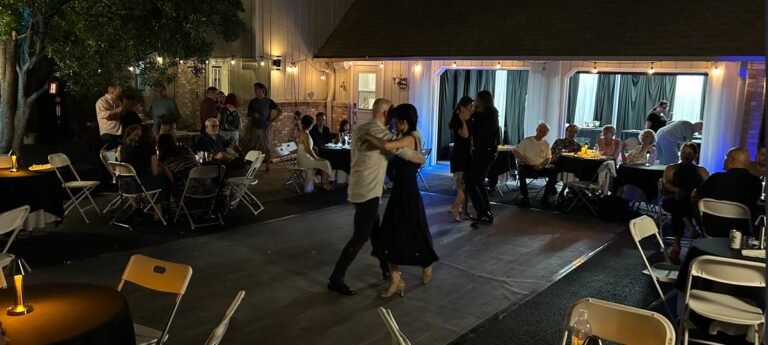
At first I thought a Milonga was simply a gathering where music plays and people dance however they like. When I actually went, it was different. There was a unique culture around everything: how the music is organized, how you invite a partner, how you move around the floor, even how you take a break. This culture grew out of traditional social tango in Argentina, and today it lives on in tango communities across the US, Europe and Asia. The purpose of a Milonga is not performance. It's to enjoy dancing while sharing music with other people. So connecting comfortably with your partner and moving in harmony with the couples around you mattered far more than difficult moves.
A typical Milonga plays three main kinds of music.
- Tango
- Vals
- Milonga
Tango is the most basic genre. Depending on the song, it can be rhythmic and strong, or soft and lyrical. Vals has a flowing feel in three beats. It goes well with smooth, circular movement. Milonga is faster and more upbeat than Tango. You bring out its rhythm with short, quick steps. At first I couldn't tell the three genres apart either. But after listening to them for months on my commute, at some point I could feel the difference from just the first few bars of the intro.
[how to easily tell tango, vals, and milonga apart]
At a Milonga, songs aren't played one at a time at random. Several songs with a similar mood, or from the same orchestra, are grouped together. This group is called a Tanda. A Tanda usually has three or four tango songs. The next Tanda might be Vals, or it might be Tango again. Traditionally, you dance a whole Tanda with the same partner. If you start the first song together, it's customary to keep dancing together until that Tanda ends. So when I choose a partner, I think of it not as one song but as spending ten minutes or so together.
[what tanda and cortina are and why they matter]
When a Tanda ends, a short piece of completely different music plays. This is the Cortina. Just as the name says, it's the curtain that separates one Tanda from the next. When the Cortina plays, most couples stop dancing, thank each other and go back to their seats. When a new Tanda begins, people look for a new partner. I remember my first time, when I didn't know about the Cortina and tried to keep dancing, and was flustered when my partner stopped. If you're a beginner, it's a good idea to watch the people around you when the Cortina plays.
2. How do you find a partner at a Milonga?
The way people invite each other differs by region and atmosphere. The traditional way is the Mirada and the Cabeceo. The Mirada is the gaze. You make eye contact with the person you'd like to dance with, and once you've both confirmed the interest, you invite them with a light nod of the head. That nod is the Cabeceo. It's a way to spare everyone the discomfort of a public rejection. That said, not every Milonga uses this method strictly. In some parts of the US and Europe, it's natural to ask directly: "Would you like to dance?" At the small Milonga where I live in the American South, asking directly was also more common. What matters is reading the room and respecting the other person's choice.
[how to use mirada and cabeceo]
Is it okay to decline an invitation to dance? Of course it is. At a Milonga, everyone has the right to choose whether to dance. You might be tired, you might want to sit out that music, or you might simply not feel like dancing at that moment. In a Cabeceo culture, just looking away gets your message across. If someone asks you directly, saying "I'll sit this one out" is enough. In the beginning, when I got turned down, it bothered me all day. Not anymore. Neither the one who declines nor the one who's declined takes it as a personal attack — that, I found, is where a good Milonga culture begins.
[how to politely decline a dance]
At a Milonga where many couples dance at the same time, nobody moves in just any direction. Every couple travels counterclockwise around the floor. This flow is called the Ronda. The Ronda is the most important principle for keeping a Milonga safe. It's like cars driving in their lanes. Each couple keeps its distance from the couple ahead as it moves along. Forcing your way past others or going against the flow causes accidents. That's why you have to stay aware not only of your own partner, but also of where the couples around you are.
[basic principles of ronda and floorcraft]
3. Why is Floorcraft important?
Floorcraft is the ability to move safely and naturally at a Milonga. It has nothing to do with how many steps you know. Someone who manages the space around them well with nothing but the basic walk is a much better social dancer.
Here are the principles I follow for good Floorcraft.
- Don't get too close to the couple in front of you
- Don't suddenly take big steps backward
- Don't force your way past other couples
- Don't use big Boleos or Ganchos when space is tight
- Keep to the direction of the floor
The leader especially needs to keep watching the surroundings. The follower, too, should consider what's going on nearby when doing big embellishments.
In class or in a performance, you can practice big Boleos, Ganchos and Sacadas in a wide-open space. A crowded Milonga is different. There's another couple right next to you. A Boleo with a high leg carries a big risk of collision. That's why, in social dancing, the ability to keep your movements small matters. For experienced dancers, a small space doesn't make the dance boring. Walking, changes of direction and rhythmic variation alone are enough to create a rich dance. To me, it's a lot like the craftsmanship of a skilled worker who gets top efficiency out of even a narrow line.
4. What should you wear to your first Milonga?
Dress depends on the event. At a casual local Milonga, comfortable clothes are fine. At special events like the evening Milonga of a festival, many people wear something a little more polished. If it's your first time, it's a good idea to check photos or the event page first. Most important is clothing you can move in easily. You'll often dance for hours, so it's best to avoid anything uncomfortable. I bring two spare shirts. I sweat a lot, so I change every few Tandas. It makes for a much more pleasant experience for my partners, too.
[the difference between a tango festival and a tango marathon]
Do you have to dance a lot at your first Milonga? Not at all. At your first Milonga, "observing" can be more important than dancing. Just watch when people step onto the floor, which direction they move, and what they do when a Tanda ends. It's also good to listen to how the DJ puts the music together. At my first Milonga, I danced exactly two Tandas. The rest of the time, I just sat by the wall and watched. But I learned more that night than in several classes. Understanding the atmosphere of the community is part of learning tango, too.
How is a Practica different from a Milonga? As you learn tango, you'll also come across the Práctica. As the name suggests, it's a practice session. The atmosphere is more relaxed than at a Milonga, and you can repeat steps or practice specific moves. People also share feedback or ask the teacher questions. A Milonga, on the other hand, is a place to enjoy social dancing. Teaching your partner moves or drilling the same pattern in the middle of a Milonga isn't good etiquette. If you want to polish a new technique, go to a Práctica. If you want to enjoy what you've learned to the music, go to a Milonga.
5. How is a Milonga different from a tango performance?
A performance is meant to be shown to an audience. That's why it uses lots of big moves, dramatic expression and flashy technique. At a Milonga, the experience with your partner comes before showing off. Even if it doesn't look impressive from the outside, if your partner is comfortable and you can feel the music together, that's good social tango. Once I understood this difference, I saw why you shouldn't bring performance moves straight onto the Milonga floor.
A Milonga is not a lesson space. You should avoid giving technical advice in the middle of a dance when the other person hasn't asked for it. Repeating things like "You need to put your foot like this" or "Your Ocho is wrong" makes the other person uncomfortable. A difference in skill doesn't automatically make one person the teacher. My years as a manager taught me that, at work too, unsolicited criticism only damages relationships. Technical issues can be handled at a Práctica or in class. At a Milonga, enjoying the dance together comes before evaluating it.
Traditionally, people often dance a whole Tanda with the same partner. But it's not an absolute obligation. If you feel uncomfortable, are in pain or feel unsafe, you can stop at any time. No one is obliged to endure an uncomfortable situation until the end of a Tanda. Still, if there's no particular problem, it's natural to dance the whole Tanda together. You chat briefly between songs, and when the next song starts, you take the Abrazo again.
A Milonga is also a social space for meeting people. You can talk briefly between songs and between Tandas. But there's no need to keep a long conversation going after a song has started. Some people like to chat, and some want to focus on the music. Just read the other person's mood. When the dance is over, give a simple thank-you. Treating the other person in a way that puts them at ease mattered more than being a good talker.
6. What is the role of the Milonga DJ?
The DJ plays a big role in creating the atmosphere of a Milonga. A tango DJ isn't just someone who picks good songs. A tango DJ designs the night: which orchestras to play in which order, how to mix Tango, Vals and Milonga, and how to manage the energy of the whole evening. They might put a soft Tanda after a strongly rhythmic one, or shift the mood as the night gets later. A good DJ keeps dancers from tiring out while making them want to keep dancing. It resembles building a production plan. These days I've even developed a favorite style, to the point that I choose Milongas by the DJ's name.
Traditional Milongas center on the orchestra music of tango's Golden Age. D'Arienzo, Di Sarli, Troilo, Pugliese and Canaro are the classic examples. Some events use contemporary tango or music from other genres. These are sometimes called Alternative Milongas or Nuevo-style events. You can't say for certain that one is better than the other. It's a matter of taste. I like the traditional side, especially D'Arienzo's crisp beat. Visiting different Milongas and discovering what music and atmosphere you like is part of the fun of tango.
7. Common mistakes beginners make at their first Milonga
First, trying to use every step you've learned. You feel the urge to try out the new move from class right away. I did too. But if the floor is crowded, the basic walk and simple changes of direction are much safer.
Second, getting too close to the couple in front of you. It's best to leave plenty of space.
Third, caring more about how others see you than about your partner. A Milonga is not a performance.
Fourth, taking rejection personally.
Being turned down once doesn't mean the person dislikes you.
[12 etiquette rules you must know before your first milonga]
8. How to be a good Milonga partner
You don't need to know lots of advanced steps to be a good partner. Your basic attitude matters much more.
Respect your partner. Don't force the distance or intensity of the Abrazo. Be considerate of the couples around you. Don't use risky moves in tight spaces. Take care of your hygiene. Don't blame your partner when mistakes happen. And above all, enjoy the music together. With this attitude alone, whatever your skill level, you'll be a partner people find easy to dance with. Most of the partners I've wanted to dance with again weren't the flashy ones, but the comfortable ones.
In class, you learn technique. You learn the walk, the Ocho, the Giro and the Cruzada, and you correct your posture and balance. But the place where tango truly comes alive is the Milonga. At a Milonga, you dance not with a prepared practice partner but with all kinds of people. You don't know what music will play. The space around you keeps changing. Within all that, two people create a dance through improvisation. This is the essential appeal of Argentine tango.
Closing
A Milonga is where tango's music, dance, people and culture meet in one space. The music is organized into Tandas and Cortinas, partners are invited through the Mirada and Cabeceo, and many couples travel together along the Ronda. It may look complicated at first. But you don't have to memorize every rule at once. For the first few times, just observe and learn slowly. In the end, what matters is a few principles: "Respect your partner, be considerate of the couples around you, dance safely, and enjoy the music together." Remember just these four, and you'll naturally understand most of Milonga culture. Once you truly start enjoying tango, you'll find a kind of charm at the Milonga that's different from the joy of learning new techniques in class.
Good music flowing, an Abrazo with a comfortable partner, and turning together with many couples as one Ronda. That moment, when the fatigue of the whole week melts away, is for me the most special experience of Argentine social tango.